A Moment of Celebration
We are excited to share that the “California Primary Care Provider Education on Early Identification and Intervention for Infants (cPCP-EI3) Project” has been awarded $20,000 from the United Cerebral Palsy Foundation 2025 Pilot Extension Grant. PI Dr. Christiana Butera, mentored by Dr. Stacey Dusing, is a member of the EI3 leadership team and an Assistant Professor of Research in the Division of Biokinesiology and Physical Therapy at the University of Southern California. This project aims to extend existing efforts to develop, refine and disseminate an innovative, accessible virtual training program for Primary Care Providers in California with the goal of enhancing early identification of Cerebral Palsy (CP) and supporting timely referral to appropriate diagnostic and intervention services.
Background:
Importance of Early Detection:
Cerebral Palsy (CP) is the most common motor disability in childhood, with approximately 1 in 345 children in the United States affected. California guidelines support diagnosis as early as 3 months, however, in the United States, diagnoses are typically delayed until 12-24 months of age, which misses the optimal window of neuroplasticity for Early Intervention. A timely and accurate diagnosis of CP is crucial for optimizing developmental outcomes, gaining access to needed services, and minimizing secondary complications.
The Current Role of Primary Care Providers:
Currently, implementation of early detection education is primarily done in High-Risk Infant Follow-Up Clinics, which are designed to evaluate medical and developmental needs of infants with early medical challenges. Primary Care Providers (PCPs), however, are often the first point of contact for families and continue to be consistent, trusted figures for routine developmental monitoring, long term medical care, health education, and support for families. Thus, a PCP office may be an untapped resource for identifying early signs of CP and referring families to needed services. Most PCPs receive limited training in recognizing these early signs and risk factors, so this award will work to expand and enhance training for PCPs across California to improve early detection of CP and other developmental disabilities through virtual training.
Aims:
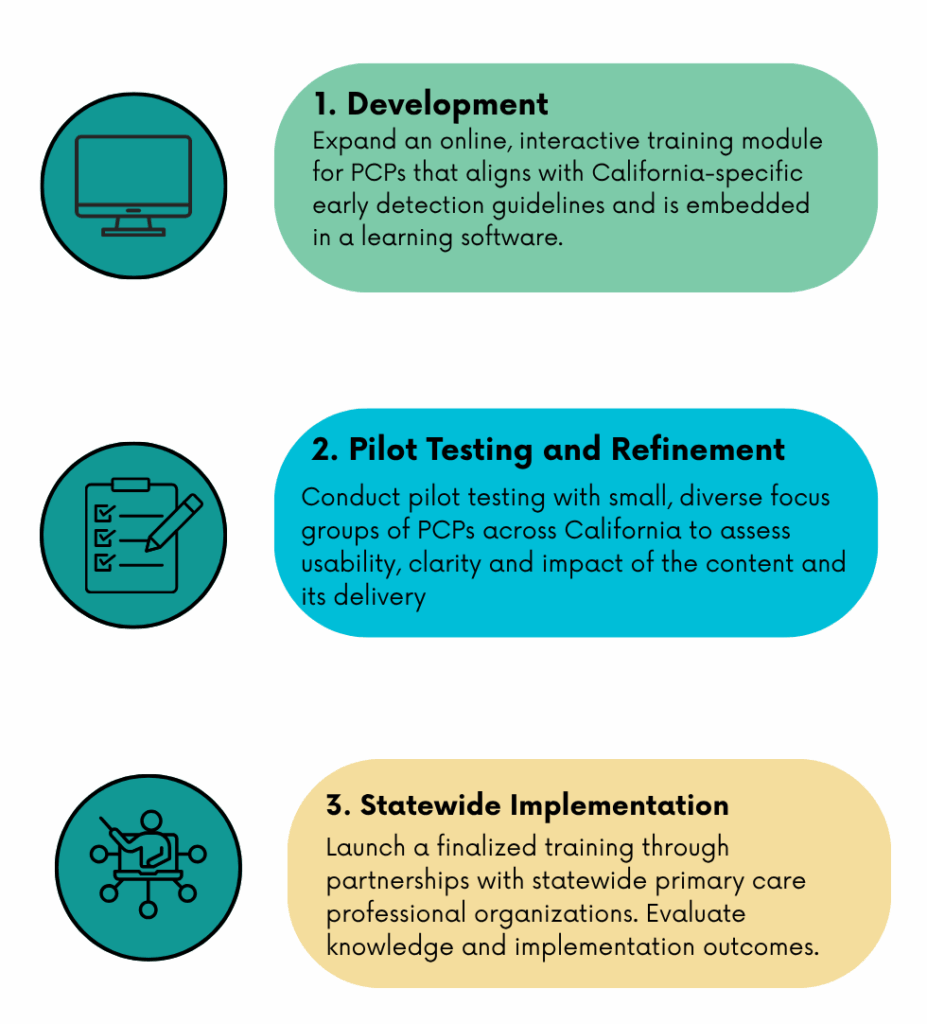
The cPCP-EI3 Project’s primary goal is to expand on existing efforts to create and distribute a virtual training program that will be accessible for PCPs in California with a focus on the early detection of cerebral palsy. We will update an existing training to improve content, accessibility, and usability. It will improve the early identification of CP and encourage timely referrals to appropriate diagnostic and intervention services by focusing on the three following aims:
Development: Updating, designing and developing a web-based, interactive training module made specifically for PCPs, aligning with California early detection guidelines. It will be embedded within a learning management system.
Pilot Testing and Refinement: Conducting pilot testing with small, diverse, and representative focus groups of PCPs across California to evaluate the clarity, usability and perceived impact of the training module.
Statewide Implementation and Evaluation: Launching the finalized training modules through partnerships with statewide professional organizations, such as the California Chapter of UCP, American Academy of Pediatrics, the California Association for Nurse Practitioners, and the California Academy of Physician Associates in order to assess the uptake, knowledge gains, and implementation results.
Anticipated Impact:
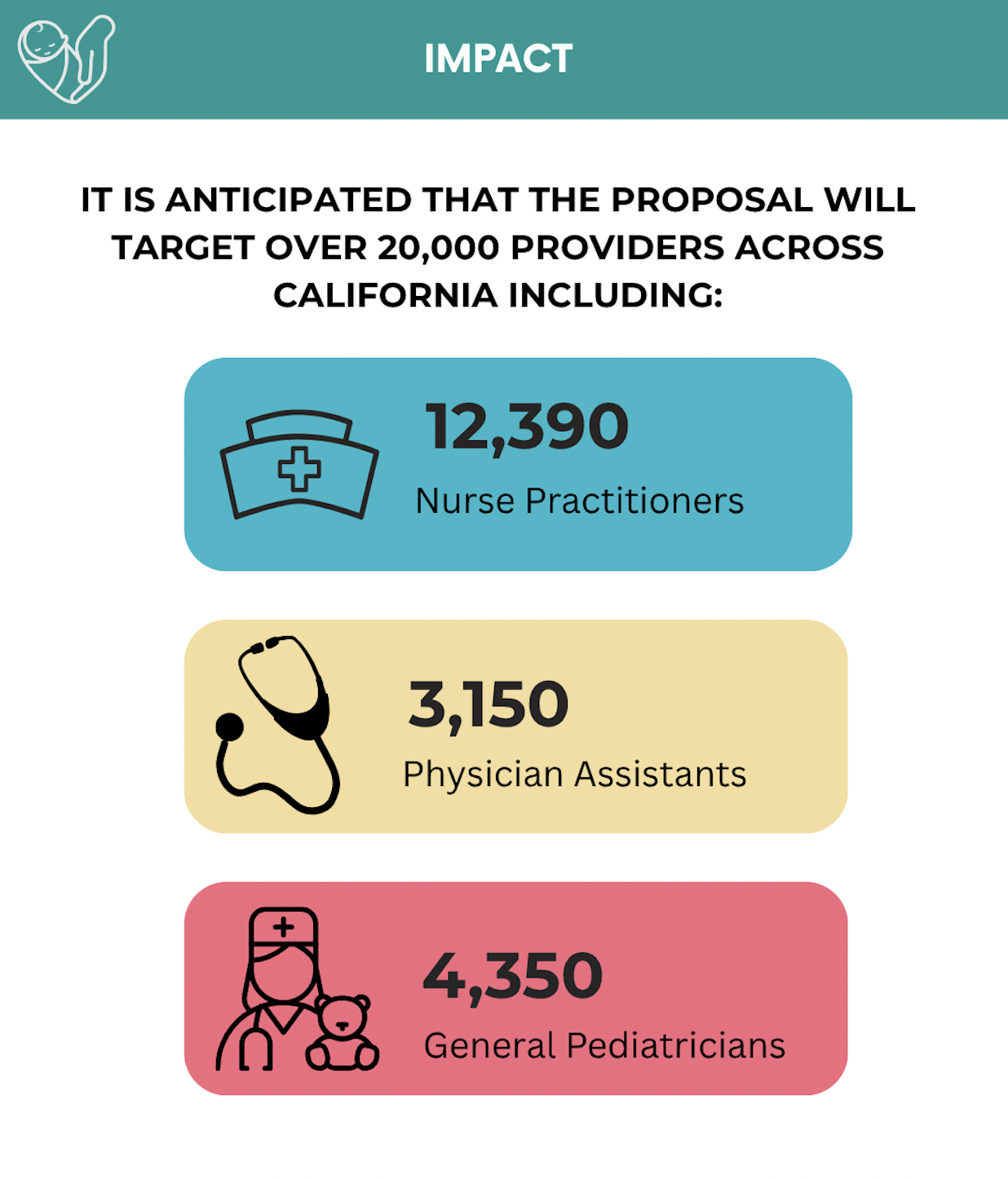
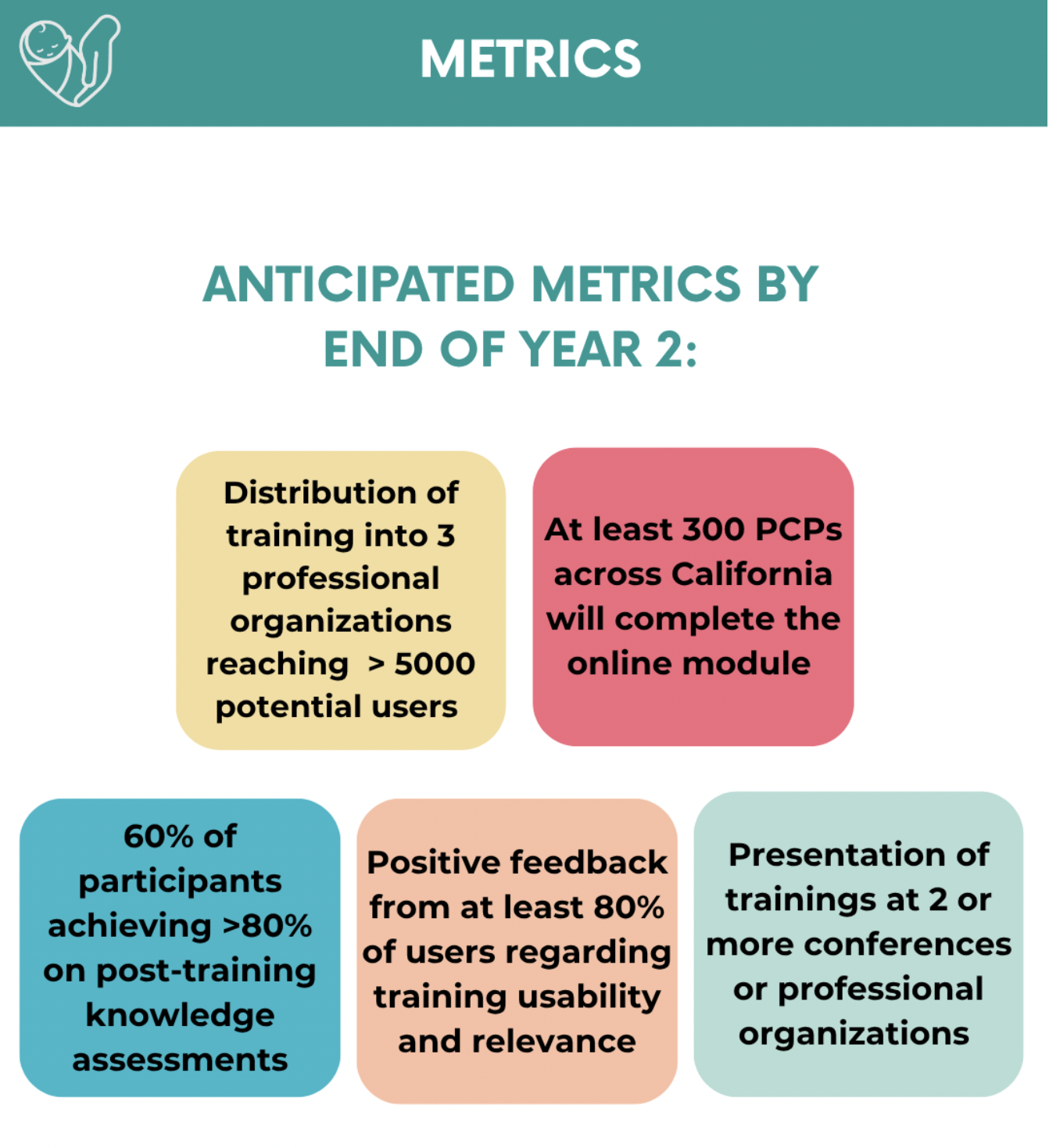
By creating a more accessible training module to educate PCPs about early detection of CP in primary care, it is expected that this project will result in increased and earlier referrals to High-Risk Infant Follow-Up clinics, neurologists, and fewer instances of conflicting information being given to families about the health and care of their children. This grant will target over 20,000 providers across California, including 12,390 nurse practitioners, 3,150 physician assistants, and 4,350 general pediatricians. With a team of PCPs trained in early detection and eligibility requirements for services in California, children will receive an earlier and increased number of referrals to intervention therapy services to address CP in its early stages.